MONTHLY HIGHLIGHT - May 2026 America Recalibrated: Energy, Capital, and the New Bridge Between Asia and the West
Thank you for reading our Newsletter!
For more timely updates and insights into our macro thoughts, we invite you to subscribe to our newsletter.


I spent most of April on the road. Three weeks across Denver, Dallas, and Los Angeles — each city distinct, each conversation adding another layer to a picture that has been forming in my mind for some time. It is a picture about where American capital is concentrating, why the country feels simultaneously strained and full of energy, and why the bridge between Asia and the United States is becoming one of the most important investment corridors of this decade.
I want to share what I saw — not through the lens of portfolios or market summaries, but through the conversations themselves. Because it is in those rooms, over those meals, that you begin to understand what is actually happening in an economy.
Denver: A Market Finding Its Footing
I arrived in Denver to speak to a group of local real estate families. These are people who have spent their careers building wealth through property — patient, experienced, unsentimental about cycles. The mood was cautious but not defeated. Two years ago, this market was absorbing a painful correction. Oversupply flooded in just as rising interest rates drained appetite for new transactions. The result was a near-freeze: deals stopped, values fell, and developers quietly stopped building.
Today, something is shifting. Not dramatically, and not uniformly — but the direction has changed. Institutional investors who stepped away are beginning to re-engage, selectively and quietly. The absence of new construction is doing its work: supply is no longer outpacing demand, and in some submarkets vacancy is already tightening. Values have reset to levels that make the arithmetic of long-term ownership viable again.
What struck me most in that room was not the real estate discussion itself. It was the curiosity about Asia. Many of these families have never invested outside the United States. Their capital is almost entirely correlated to the American economy. Several had been watching Korean and Japanese markets outperform over the past two years and were genuinely asking: how do we access that? That question — asked plainly, without pretense, over a working lunch — is one I have been trying to answer for American families for several years. It is encouraging to feel that appetite is finally beginning to match the opportunity.
Dallas: Energy, AI, and the Bottleneck That Changes Everything
Dallas was different. Where Denver felt like a market recovering its confidence, Dallas felt like a city operating at full speed. The energy sector in Texas is booming in a way I have rarely seen in my career. The families I met — oil and gas dynasties with operations that span multiple continents — have capital, conviction, and an unambiguous clarity about what they want. In Texas, people tell you yes or no. They mean it. There is very little of the oblique signalling you encounter in other financial centres. That directness, I found, is itself a kind of sophistication.
But beneath the momentum, there is a tension that defines American capital at this particular moment. Energy is becoming the bottleneck to everything. The AI revolution is not, in the end, primarily a software story — it is an infrastructure story. Every data centre, every inference cluster, every large language model running at scale requires reliable, uninterrupted, affordable electricity in quantities the existing grid was simply not designed to supply. The demand curve is nearly vertical. Generation capacity — conventional, nuclear, and renewable — cannot scale at anything close to the same rate.
Texas has genuine advantages here. The land is available. The regulatory environment is more permissive than most American states. The political will exists to permit new generation capacity, including nuclear, at a pace that would be difficult to achieve elsewhere. But even Texas is struggling to keep pace with what the AI buildout demands. This gap between energy supply and the needs of the next economy is one of the defining investment themes of the coming decade — and it connects directly to Korean and Japanese industrial strength in power infrastructure, grid technology, and small modular reactors.
"The AI revolution is not primarily a software story — it is an infrastructure story. Energy is the bottleneck that every serious investor needs to reckon with now."
The broader macro context compounds all of this. Inflation remains stubbornly elevated, complicated further by the conflict in Iran, which has added new volatility to global energy prices and pushed supply chain costs higher across manufacturing and logistics. Interest rates show no clear pathway to meaningful near-term cuts. Businesses and families carrying floating-rate debt are under real pressure. This is not a temporary discomfort — it is the operating environment. For long-duration capital with a clear industrial thesis, however, these same conditions create a genuine and durable moment of opportunity. The families I met in Dallas understand this intuitively. It is part of the culture of how they have always built wealth: in real things, with their hands, producing outputs the world cannot do without.
The Korean Footprint in America
What I did not fully anticipate before this trip was how extensively and quietly Korean industrial investment has already taken root in American soil. The scale of what Korean conglomerates have committed to the United States is remarkable — and largely underreported outside of specialist circles.
Samsung’s semiconductor commitment to Texas has grown into something genuinely historic. The Taylor facility, initially announced at $17 billion, has since expanded significantly under CHIPS Act commitments: Samsung is now expected to invest over $37 billion across its Texas operations, establishing a comprehensive manufacturing and R&D ecosystem for leading-edge logic chips. The facility, which targets full operations in 2026, will produce the advanced semiconductors that power NVIDIA’s AI accelerators, Tesla’s autonomous systems, and the next generation of high-performance computing. Around Samsung, a cluster of Korean first-tier suppliers is quietly forming — the semiconductor supply chain is regionalising into the American heartland, and Korean companies are at the front of that movement.
Hanwha Group’s Philadelphia Shipyard story is equally compelling, and perhaps even more strategically significant given the current geopolitical climate. Hanwha acquired the yard for $100 million in late 2024, and in August 2025 announced a further $5 billion infrastructure investment plan — the most ambitious modernisation programme in the shipyard’s history. The goal is to increase annual production from under two vessels to up to twenty, bringing Korean shipbuilding velocity to American shores. In Korea, a Hanwha yard produces one ship per week. The gap to Philadelphia is not technical; it is systemic. Hanwha is methodically closing it, with the US Navy — which has a legislative mandate to source domestically built vessels — as the primary long-term beneficiary.
Hyundai has invested $7.6 billion in its Metaplant America facility in Savannah, Georgia — the largest economic development project in the state’s history, now fully operational and producing EVs at scale. Its acquisition of Boston Dynamics signals a commitment to robotics and physical AI that extends well beyond any single product category. These are not passive financial allocations. They are operational commitments — built with Korean capital, Korean engineering, and a Korean work ethic that treats a deadline as a promise.

The motivations behind this wave are structural and strategic. Korean companies face meaningful tariff exposure if they manufacture exclusively at home and export to the US market. They want direct access to the world’s largest consumer base. They are navigating a geopolitical environment where supply chain resilience — producing critical goods inside allied territories — has become a corporate imperative, not merely a policy preference. And they are responding to American industrial incentives that actively reward foreign direct investment in advanced manufacturing. The result is that Korean industry is becoming woven into American infrastructure in ways that will only deepen over the next decade.
The LATAM Connection
In September, I will be speaking at the Volcano Summit in Antigua, Guatemala — an annual gathering of Latin American families thinking seriously about how to position their capital in a world reorganising around new geopolitical realities. Many of these families are already anchoring themselves in Los Angeles, Miami, and now Dallas. They are curious about Asia in a way they have not been before, looking for growth that does not simply track the US market. This is a triangle that genuinely excites me: Asia to the United States, and from the United States onward to Latin America. More on this as the year develops.
Gathering Our Community
For the second half of 2026, we are planning to bring our partners and clients together in Asia — likely Taipei or Kuala Lumpur in November, continuing our AGM tradition. But this trip has convinced me that we also need to create something in the first half of the year for the connections we are building in America. Dallas, in particular, feels ready. The family office community there is internationally oriented, intellectually curious, and genuinely open to partners who bring something they do not already have access to. If you are interested in joining a small, closed-door session — whether in Dallas or in Singapore ahead of the Formula One weekend in September — please reach out to me directly. These gatherings are where the relationships that actually drive investment are formed.
The trip confirmed something I have believed since Pine’s founding. The families doing the most interesting things in the world are the ones who refuse to stay in one geography. They move capital, relationships, and ideas across borders in ways that create value no purely domestic investor can access. Pine exists to be the trusted companion for that kind of family — in Asia, in America, and increasingly, in the spaces between.
To discuss any of the themes in this newsletter or learn more about Pine Capital’s strategies, please reach out to Hyuk-Tae Kwon at ir@pinevp.com.

Hyuk-Tae Kwon
Founder and CEO
Portfolio Spotlight
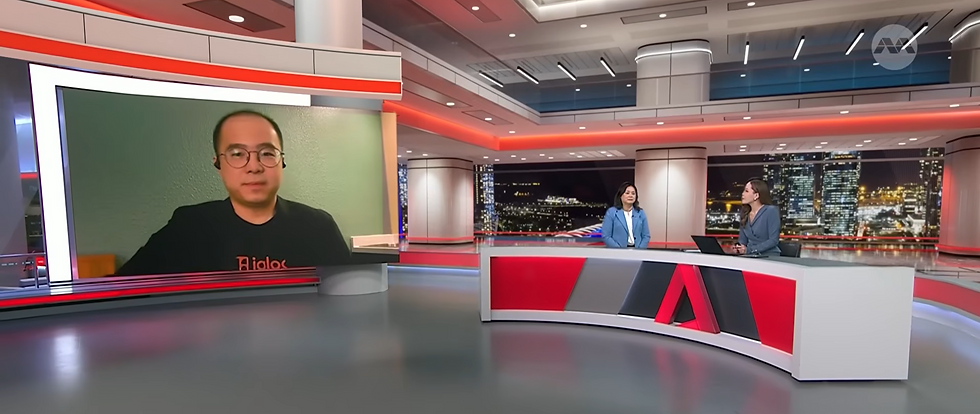
Reflections from a Roundtable with Prof. Lisa Sachs: Collaboration Begets Continuity
by Investment Manager Joel Kam

On April 16, Pine Capital convened a roundtable with Professor Lisa Sachs, bringing together capital allocators, corporates, and foundations to explore how each is shaping the future of the built environment. What emerged was not just a discussion of innovation, but a deeper realization that progress in this space depends on sustained, coordinated collaboration.
The Case for Discourse and Collaboration
The built environment is one of the most complex systems we engage with daily. A single building embodies layers of interdependent systems; from materials and design to energy management and long-term maintenance. At the roundtable, hearing perspectives from funders, operators, and solution-builders underscored a key truth: no single stakeholder can solve this alone. Meaningful outcomes require alignment across the entire value chain. Collaboration is not a “nice to have”, it is foundational to continuity and impact.
The Case for Reimagining Funding Pathways
Another clear takeaway was the need to rethink how innovation in this space is financed. Traditional equity financing alone is often insufficient or misaligned for the long timelines and capital intensity required for certain projects or innovation breakthroughs. Instead, there is a growing ecosystem of alternative funding routes: blended finance, catalytic capital, project-based financing, and more. Yet many founders remain unaware of these pathways. Just as importantly, capital providers must shift from competing silos to coordinated partnerships. The goal is not just to fund innovation but to fund it appropriately, enabling solutions to scale sustainably over time.
The Case for Practicality
In an industry defined by deeply entrenched value chains, the narrative of “disruption” can sometimes miss the mark. While breakthrough technologies are exciting, they are often too costly or impractical for widespread adoption at the onset. The discussion reinforced that real progress in the built environment often comes from incremental innovation, solutions that are slightly better, more efficient, or more cost-effective, and therefore actually deployable at scale. Practicality, not just novelty, drives adoption.
Looking Ahead: Building a Community of Action
What stood out most was the shared willingness to engage not just in conversation, but in ongoing collaboration. At Pine Capital, we believe these dialogues must continue and expand. The challenges in the built environment are too large, and too interconnected, for isolated efforts.
We are actively growing a community of like-minded investors, corporates, and founders who are committed to shaping this space together. If you are building, investing, or simply exploring innovations in the built environment, we would love to connect!
Gold has lost its shine… or was it never that shiny to begin with?
by Investment Director Larry Lau
Gold has always carried a powerful investment story. It is scarce, tangible, politically neutral, and nobody else’s liability. For centuries, it has served as a store of value. In modern portfolios, that history has been converted into a broader claim: gold is a crisis hedge, an inflation hedge, and a diversifier that should protect investors when equities fall.
Those claims deserve closer scrutiny.
The recent US-Iran crisis period offered a timely reminder. This should have been a supportive environment for gold: geopolitical risk was rising, oil prices were volatile, inflation fears resurfaced, and investors were forced to consider tail risks that could not be easily modelled. Yet at key points, gold declined alongside US equities rather than providing the offset investors typically expect from a defensive asset. That matters because crisis alpha should deliver positive returns when the rest of the portfolio is under pressure. If gold moves in the same direction as equities during stress, its role as a reliable portfolio diversifier becomes harder to defend.
The historical evidence points to the same conclusion. Coudert and Raymond examined gold and US equities from February 1978 to July 2009 and found that the long-run correlation between gold and US equities was almost zero, at 0.001. At first glance, this supports gold’s role as a diversifier. But the same study found that gold was not a lower-risk asset. Gold futures delivered annualised nominal returns of 7.1%, below US equities at 12.3%, while gold’s annualised volatility was higher, at 19.7% versus 15.3% for equities.
In other words, gold’s diversification case does not come from superior returns or lower volatility. It comes almost entirely from low correlation. When that correlation breaks down in stressed markets, the case for gold as a portfolio stabiliser becomes harder to defend.
The same study also weakens the crisis-alpha argument. During recessions, gold performed well, with annualised nominal returns of 11.9% versus -4.2% for US equities. But during US equity bear markets, gold’s nominal annualised return was -1.2%, while US equities fell -20.1%. Gold reduced losses, but it did not generate positive returns. Other studies reach a similar conclusion. Baur and Lucey found that gold’s safe-haven properties after extreme equity shocks were short-lived, while He, O’Connor, and Thijssen found that gold may help diversify portfolios over time but does not reliably behave like a true safe haven when equity markets come under pressure. Gold’s historical performance is therefore closer to a conditional hedge than a dependable source of crisis alpha.
The inflation-hedge argument is also weaker than commonly believed. Erb and Harvey argue that gold may preserve purchasing power over very long horizons, but is an unreliable inflation hedge over normal investment horizons as the gold-to-CPI ratio has varied widely over time.
Modern market structure further complicates the picture. Gold is no longer just a physical store of value held by central banks, households, and long-term savers. It is also a financial asset traded through ETFs, futures, derivatives, and systematic strategies. That makes gold more sensitive to investor flows, positioning, dollar expectations, and real yields. In periods of stress, these forces can dominate the traditional safe-haven narrative.
This helps explain why gold can rise with US equities during crises. If investors believe a geopolitical shock will lead to easier monetary policy, lower real yields, or a weaker dollar, both gold and equities can benefit from the same liquidity impulse. In that environment, gold is not hedging equity risk. It is responding to the same macro factor supporting equities.
The reverse can also happen. In a liquidity shock, gold can be sold alongside equities because investors sell what they can to raise cash. Gold may recover later, particularly if central banks respond aggressively, but by then equities may also be recovering. That weakens gold’s usefulness as a crisis hedge.
Investors do not need hedges that work only in correlation tables. They need hedges that work when capital preservation matters most. If gold’s correlation with US equities turns positive during stress, the portfolio is less diversified than it appears.
The recent US-Iran crisis period is therefore less an anomaly than a useful reminder: gold was never quite as shiny as its reputation suggested. From a portfolio perspective, our process signaled that gold’s market structure turned negative since 19 March. Unlike in our February newsletter, where we suggested buying the dips, we believe patience is now warranted, and strength should be used to trim existing allocations.
Copyright (C) 2026 Pine Capital Management. All rights reserved.
This material is provided for general information purposes only and does not take into account the specific investment objectives, financial circumstances, or particular needs of any individual. You are encouraged to consult a qualified financial adviser before making any investment decisions. Historical performance and any forward-looking statements regarding the economy, stock, bond market, economic or industry trends should not be relied upon as indicators of future results. Past performance is not indicative of future returns. Opinions expressed may change without notice and should not be interpreted as personalised advice or a recommendation. Any references to specific securities (if applicable) are for illustrative purposes only. This publication has not been reviewed by the Monetary Authority of Singapore.


